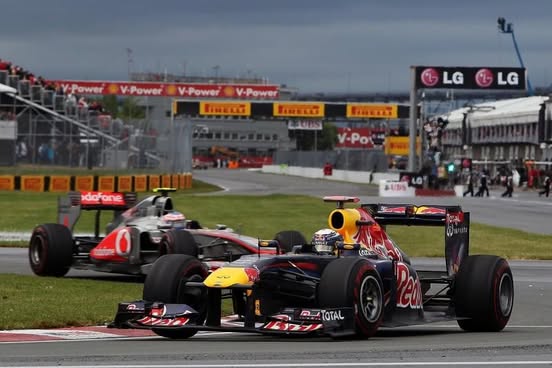
“Capturing the spirit of speed — from real tracks to virtual laps.”

Author: Giorgís

  • Hungarian, Dutch and Italian Grand Prix: Goodbye Europe

    At least geographically, since from now on all the remaining Grands Prix will be held in Asia and the Americas. Better late than never for another recap of what happened, and ahead of the weekend in Azerbaijan, let’s take a look back at the previous race weekends.

    We start with the Hungarian Grand Prix and specifically with Free Practice. There we saw clearly improved Aston Martin cars, while at the top it was consistently the two McLarens with Charles Leclerc in 3rd.

    In qualifying, Lewis Hamilton for the second consecutive race failed to make it into Q3, finishing only 12th fastest, while equally disappointing was Kimi Antonelli in 15th place. At the top, to everyone’s surprise—including his own—Leclerc took Pole Position, beating both McLarens by less than half a tenth of a second.

    On Sunday, the race started ideally for Lando Norris, who lined up third. Or maybe not, because he lost 2 positions within the first 4 corners. But he quickly regained them, slotting back behind Leclerc and Piastri, with the Monegasque consistently 1–2 seconds ahead of the Australian McLaren driver until lap 40.

    Nevertheless, Ferrari had to take measures that slowed down Leclerc’s pace, in order to avoid any potential DSQ due to floor wear (something that had already happened in China earlier in the season). The result was the loss of the podium, with Leclerc limited to 4th place.

    The winner, however, was not Oscar Piastri, as Lando Norris, making a one-stop strategy compared to his teammate’s two, took the victory and cut the gap to Piastri down to 9 points. George Russell finished 3rd, while Aston Martin capped off a strong weekend with double points (5th and 7th), separated by Gabriel Bortoleto.

    After the summer break, we head to the Dutch Grand Prix, where even though we saw Lando Norris dominating in Free Practice, in qualifying it was Oscar Piastri who took pole. Pleasant surprises on Saturday included Carlos Sainz with Williams making it into Q3 for the first time since Imola (8 races earlier), as well as Isack Hadjar’s 4th place—behind only Max Verstappen and the two McLarens.

    In the race, once again Lando Norris did what has become a habit: a poor start that cost him second place—a spot he regained from Verstappen on lap 9. The Dutch fans’ favorite was looking for a strong performance on home soil after his 9th-place finish in Hungary.

    Ferrari, meanwhile, seemed on course for a double top-6 finish, until a mistake from Hamilton shortly after his pit stop on lap 23, followed by Antonelli colliding with Leclerc as he exited the pits 30 laps later, left the Scuderia with 0 points from a race weekend for the first time this season.

    After two Safety Cars and with the two McLarens battling for victory, Norris’s engine gave up 7 laps before the finish—something that not only extended the gap to 34 points, but also allowed Isack Hadjar to claim his first career podium. In the top 10 there were plenty of shake-ups, with the most notable being Oliver Bearman’s 6th place—remarkable given that the Briton had started dead last(!).

    And then we move on to the Italian Grand Prix, at the legendary Monza circuit, where Ferrari finished FP1 with a 1–2. But that was the only time they led the way—no other fastest times all the way through qualifying. There it was Max Verstappen who shone, beating both McLarens and taking pole position for the first time since the British Grand Prix in early July.

    Even before the race began, we had a retirement, as Nico Hülkenberg pulled into the pits at the end of the formation lap.

    With the race starting with 19 cars, we saw a rare situation where Lando Norris not only made a clean start but actually gained a position—because Verstappen cut the first chicane and had to give the place back to Norris on the start/finish straight. By lap 4, however, the Dutchman had reclaimed the lead in decisive fashion and disappeared into the distance.

    Two laps later, Piastri, who had lost a position to Leclerc at the start, regained his place in the podium positions. The driver who climbed the most in a short period, though, was Lewis Hamilton. Starting from 10th due to a 5-place grid penalty, he made 4 overtakes and stayed in 6th until the end, with George Russell sandwiched between the two Ferraris all the way to the chequered flag.

    The most interesting scene, however, came near the end of the race. On laps 46 and 47, Piastri and Norris respectively came in for tire changes. Piastri’s stop was normal, but Norris’s was slow—so slow that his teammate managed an “undercut” to take 2nd place. The team, though, didn’t want the final classification to be decided by a slow pit stop, and asked the Australian to give the position back to his teammate. There was pushback—not only from Piastri himself, but even from Max Verstappen, who commented via team radio: “Why did they switch places? Just because of a slow pit stop?”

    With Verstappen taking the win, in the Drivers’ Championship the gap between the two McLarens narrowed slightly—to 31 points. In the Constructors’ Championship—or what you could call a championship fight—McLaren now has their first match point, as it can mathematically secure the title.

    So that’s the recap of the last European races. Now let’s see if McLaren locks in back-to-back titles in Baku, and how the battle between the drivers will evolve in the standings.
  • Belgian Grand Prix: One Step Before the Summer Break

    Belgian Grand Prix: One Step Before the Summer Break

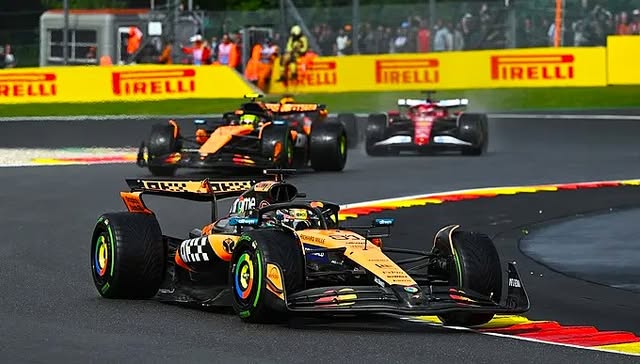
    The first race weekend since the creation of Oversteer Weekly is a fact. The Belgian Grand Prix at the legendary Spa circuit has gone down in history, but unfortunately, despite being quite promising, it won’t be remembered much.

    It was a sprint weekend, meaning there was one free practice session on Friday afternoon, followed a few hours later by Sprint Qualifying, then the 100-kilometer Sprint Race on Saturday afternoon, with the standard Qualifying session taking place afterwards. Finally, as always, the weekend concluded with the main race on Sunday. So there was more action, but less time for teams to find the right setup.

    As often happens at Spa, rain was forecast for all three days. In the end, however, it only fell on Sunday, adding an extra element of excitement to part of the race.

    Starting with Friday, the sole free practice session saw Oscar Piastri finish as the fastest, followed by Max Verstappen and Lando Norris. In the next four positions were the two Mercedes and two Ferraris, alternating places. Ferrari brought upgrades to the Grand Prix but didn’t have much time to test them.

    In Sprint Qualifying, surprises came early in SQ1, with Lewis Hamilton and Kimi Antonelli being knocked out after making mistakes—Hamilton at the Bus Stop chicane and Antonelli at Stavelot—during their attempts to advance to SQ2. Oscar Piastri took pole for the sprint by four-tenths over Verstappen and six-tenths over Norris.

    Saturday’s Sprint Race start seemed to catch both McLarens off guard, as they each lost a position on the Kemmel Straight—Piastri to Verstappen and Norris to Charles Leclerc. Norris reclaimed third from Leclerc by lap four, where he would eventually finish, while Piastri couldn’t get back ahead of Verstappen over the 15 laps. Overall, aside from the battles up front, little changed behind, with Hamilton and Antonelli unable to recover due to their poor qualifying results. The top eight scorers included Esteban Ocon, Carlos Sainz, Oliver Bearman, and Isack Hadjar. Notably, this sprint victory marked the beginning of Laurent Mekies’ era at Red Bull, following the unexpected dismissal of long-time team principal Christian Horner. Even if it’s just a sprint win, it’s still a win.

    Saturday’s Qualifying session looked slightly different from Friday’s, as some drivers adjusted their car setups in anticipation of possible rain on Sunday. Even so, Kimi Antonelli was once again eliminated in Q1, while Lewis Hamilton initially avoided repeating Friday’s mistakes… or maybe not. His lap that moved him up from 16th was deleted for exceeding track limits at Raidillon. In Q2, an in-form Gabriel Bortoleto advanced to Q3, while Lando Norris secured pole position with the fastest lap on his first run. Piastri improved on his second flying lap but not enough to change his position. Right behind the two McLarens, Charles Leclerc would start from 3rd, with a lap just three thousandths of a second faster than Max Verstappen, whose car was clearly set up for wet conditions.

    On race day, it rained—enough for the stewards to delay the start of the race. The scene evoked memories of 2021, a Grand Prix that essentially never happened. The sun came out, the track began to dry, and everyone prepared to start on intermediate tires. After an 80-minute wait and three laps behind the Safety Car, the race finally began. Norris seemed to start a few seconds late, losing the lead at the end of the Kemmel Straight to Oscar Piastri, after making a small mistake earlier that gave the Australian the opportunity to attack and pass.

    Further back, Charles Leclerc had to defend third from Max Verstappen, while George Russell overtook Alex Albon for fifth.

    Even further back, Lewis Hamilton started from 18th and, being a rain specialist, began overtaking slower cars as if they were standing still. He made bold moves even in places we don’t often see overtakes, like at Stavelot on lap nine, where he passed Pierre Gasly.

    By lap 12, Hamilton became the first driver to switch to slicks, a (surprisingly) correct strategic call by the Scuderia. After all pit stops had been completed, Hamilton emerged in seventh, right behind Alex Albon in sixth.

    On lap 14, the last of the front runners to pit for slicks was Lando Norris. Unlike most of the grid who opted for the medium compound, he went for the hards, hoping to push them more aggressively to the checkered flag.

    Unfortunately, from that point on, the race lost some of its excitement. Hamilton couldn’t overtake on the dry as he had in the wet, and Verstappen spent all 44 laps watching the rear wing of Leclerc’s Ferrari. Norris, meanwhile, never posed a real threat to Piastri. A slow pit stop and a couple of minor mistakes cost him precious seconds, and he never got close enough to put pressure on the Australian. Rounding out the top ten were Liam Lawson, Gabriel Bortoleto, and Pierre Gasly.

    And so, with that, we approach the end before the summer break. McLaren move ever closer to its second consecutive Constructors’ Championship, having now completed their sixth 1-2 finish of the season—something they hadn’t done at Spa since 1999. Oscar Piastri extends his gap over Lando Norris to +16 points, and now all eyes turn to Hungary, where we’ll see whether the balance of power in the title fights begins to shift.

  • F1 the Movie: An (As Much As Possible) Unbiased Review

    F1 the Movie: An (As Much As Possible) Unbiased Review

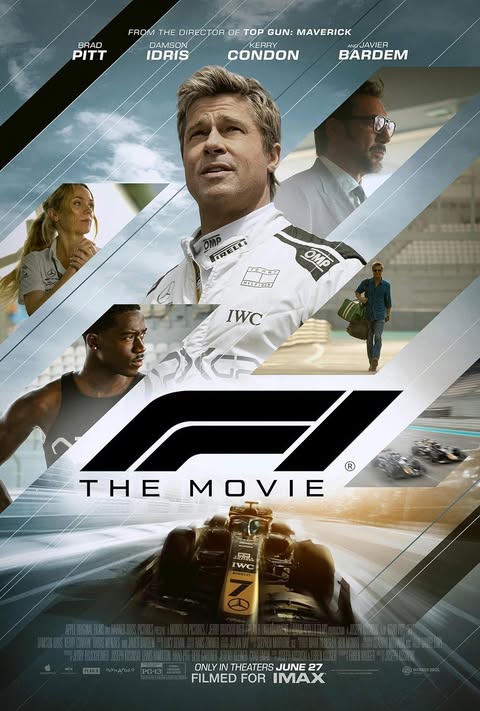
    A few days ago, the highly anticipated F1: The Movie premiered — a film that set out to fill theaters, not disappoint fans of the sport, and at the same time convert newcomers into followers. And I must say, it achieved its goals.

    As for the plot (as spoiler-free as possible), the main character is Sonny Hayes (Brad Pitt), a highly promising F1 driver in the 1990s whose career was cut short by a serious crash at the Spanish Grand Prix in 1993. Since then, he has lived a nomadic life, gambling and racing in various lower-tier series — until a chance reunion with his old friend and former teammate Ruben Cervantes (Javier Bardem) presents him with the opportunity to return to the pinnacle of motorsport, 30 years later.

    On the racing side, the shots and scenes are impressively realistic, thanks in part to the fact that filming took place on actual circuits using real cars and professional drivers. As a result, the film manages to evoke a wide range of emotions — the kind you’d feel while watching a real F1 race: tension, excitement, admiration, heartbreak, and shock, often switching between them in an instant. There’s plenty of action, and the effects are phenomenal — especially in IMAX, where they truly shine.

    As for the screenplay, while it might not be the most original, it’s certainly engaging. After all, there haven’t been many films that delve into what F1 is really about — a sport full of joy, sorrow, drama, tension, and quite often, intrigue. And with the lead actors delivering performances worthy of their reputations, F1: The Movie doesn’t leave any of that out.

    In conclusion, I truly believe that the 150 minutes a viewer spends watching F1: The Movie will be rewarding — whether they have no idea who Schumacher, Hamilton, Senna, or Verstappen are, or whether they’re like me and will catch even the tiniest of details, feeling the urge every 2–3 minutes to point at the screen like Leonardo DiCaprio in Once Upon a Time in Hollywood.

  • Canadian Grand Prix 2011: Rain, red flags, safety cars, records, and twists until the very end — a race that had it all.

    Canadian Grand Prix 2011: Rain, red flags, safety cars, records, and twists until the very end — a race that had it all.

    Over the years, there have been more than 1,000 races in F1 history. Among them, many have stood out. Some featured dramatic finishes in the final corners, others were marked by changing conditions, interruptions, accidents, safety cars, and so on. But one race in particular managed to combine all of the above and keep us on edge right up until the chequered flag.

    We go back to (relatively) distant 2011, a season that had started with several changes compared to 2010. Pirelli had just become the exclusive tire supplier for the entire grid, KERS (Kinetic Energy Recovery System) — which allowed drivers to convert braking energy into power — had returned, and for the first time, DRS (Drag Reduction System), the now-famous movable rear wing that gave attackers better top speed on straights, had been introduced.

    As for the championship, the season had started with Red Bull leading the way and its champion Sebastian Vettel already laying a solid foundation for a second consecutive title by winning five of the first six races, building a gap over second-place Lewis Hamilton worth more than two race victories.

    And so, we arrive at the race weekend of June 10–12 for the seventh round of the championship in Montreal, Canada. With Saturday’s qualifying sessions won by the unstoppable Sebastian Vettel, the German had already taken the first step toward claiming his sixth win of the season. However, for the 70-lap race on Sunday, nothing was certain — just like the skies over Montreal.

    The starting grid for the top 10 was as follows: Sebastian Vettel, Fernando Alonso, Felipe Massa, Mark Webber, Lewis Hamilton, Nico Rosberg, Jenson Button, Michael Schumacher, Nick Heidfeld, and Vitaly Petrov. The only driver out of the 24 not to start on the grid but from the pit lane was Jaime Alguersuari, as he had chosen to make setup changes after qualifying, which according to regulations incurred penalties.

    Since the first six races had taken place in completely dry conditions, this meant that Pirelli’s two wet-weather tire types — intermediates and full wets — had never been tested in race conditions. So with the track already wet, race director Charlie Whiting deemed it necessary to start the race behind the safety car, with all drivers mandated to use full wet tires. Until the track was declared safe, overtaking was forbidden and the pace was limited.

    So, although the official local start time was 13:00, the race began a few minutes later. After four laps, the safety car pulled in for the first time. And from the very first seconds, chaos ensued. In Turn 2, battling for 4th place, Mark Webber and Lewis Hamilton made contact, sending them down to 14th and 7th respectively. Everyone was not only fighting each other but also struggling to keep their cars on the track.

    As the first lap under race conditions ended, Vettel was already showing he wouldn’t be challenged much, setting the fastest lap and continuing to improve, pulling away from the rest. But that didn’t last long. At the end of lap 7, Lewis Hamilton attempted to overtake his McLaren teammate Jenson Button. Likely due to limited visibility in the rain, Hamilton found himself squeezed between Button and the wall, resulting in a collision. A few corners later, Hamilton had to retire, and Bernd Mayländer (the safety car driver) returned to set the race pace again.

    After the restart, track conditions started to improve, and many drivers switched from full wets to intermediates, shaking up the order. Button had to visit the pit lane a second time shortly after, as he had exceeded the speed limit under safety car conditions and was handed a drive-through penalty. By lap 18, the rain returned — this time more heavily. One lap later, the safety car was back. Six laps after that, the race was red-flagged. Everyone now just had to wait for the downpour to ease.

    Finally, at 15:50 local time, we had déjà vu of 13:00 — another safety car stint with full wet tires for everyone. Vettel still led, but we were now on lap 26 and the pit stops had reshuffled the midfield.

    After the fourth safety car exit on lap 34, the race resumed, with Vettel pulling away again. Kamui Kobayashi found himself second on the restart, having taken a gamble and not changed tires once before the red flag.

    The track slowly dried, meaning full wets were gone for good. But just as the racing picked up… drama again. On lap 37, Button collided with Fernando Alonso at Turn 3. Alonso spun and parked helplessly at the edge of Turn 4, while Button suffered a puncture. Once again, the safety car neutralized the race. And with Button now 21st and last of the remaining runners after his fourth pit stop, he had a mountain to climb.

    On lap 40, the safety car withdrew yet again. The rain had stopped, the track was drying, Vettel pulled away, and battles started behind him. Massa was fighting Kobayashi for second, but seven-time champion Michael Schumacher overtook them both, while Button was climbing — up to P10.

    Intermediate tires were also becoming obsolete. Despite water on the track, a dry racing line had formed. Time for slicks. After pit stops, the fastest drivers were Webber and Button, climbing the ranks. Vettel had a comfortable gap, while Massa made a mistake while trying to lap a slower car, stepped on a wet patch, damaged his front wing, and had to pit.

    Kobayashi was also struggling as the track dried, being passed easily by quicker cars. He remained in the points, but a podium was slipping away. When he had to defend from Nick Heidfeld on lap 56… he didn’t actually have to. A minor contact between them dislodged Heidfeld’s front wing, which got trapped under his car, making it uncontrollable. Heidfeld retired in the Turn 3 runoff area. And yes, Bernd Mayländer came out for the sixth time to erase the gaps.

    By nearly 17:00 local time, on lap 60, the safety car left the track, and weirdly enough wouldn’t return. Vettel now had to defend the lead he had held all race for 10 more laps from Schumacher, Webber, and Button. On lap 64, Webber attempted a move into the final chicane, lost the rear briefly, and dropped behind Button. One lap later, Button passed Schumacher, and now, after this massive and chaotic race, had to close a 4-second gap in 5 laps to take the win.

    Approaching the two-hour time limit (excluding the red flag) and entering the final lap, Button was glued to Vettel’s gearbox — but not close enough to pass. Only a mistake could cost Vettel the win.

    And that’s exactly what happened. In Turn 6, Vettel touched a wet patch, ran slightly wide, and Button seized the moment — taking the lead and crossing the line first, despite leading for less than one lap in the entire race.

    As Button himself said afterward, “That might be my best victory ever.” Understandably so — in a spectacular race, with multiple penalties and pit stops, he had to overtake the same drivers several times, fight countless battles, and finally pass the long-time leader on the last lap. One of the most incredible races of all time, which also broke records:

    • No other race to this day has had more than 5 safety car deployments
    • No other winner has visited the pit lane 6 times (5 for tires, once for a penalty)
    • Τotal length of the Grand Prix: 4 hours, 4 minutes, and 39 seconds. A record unlikely to ever be broken, due to rule changes on race duration

    To be honest, I really wish we had more races like this one. Sure, not every race is boring, but we don’t get to see races like that very often. In future articles, we’ll break down a few more of those. Finally — if you’d like to see it for yourself and not just read about it, so you can relive, even in part, what we experienced live back then, here’s the link from F1’s official YouTube channel:

    https://www.youtube.com/watch?v=31qQsC4